Back to blog
"I Felt Strange and Like I Didn't Fit" — Mark Ruffalo, the Hulk, and the Message to His Younger Self
Mark Ruffalo, known to many as the Hulk, has spoken about ADHD, dyslexia, depression, and raising neurodivergent children without shame.
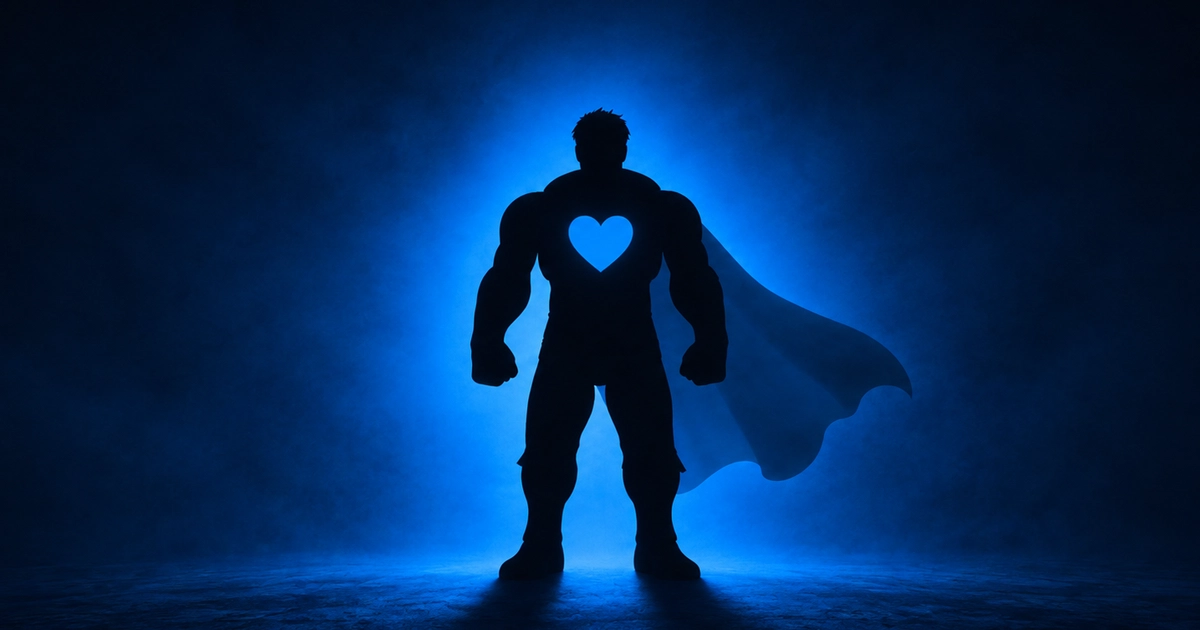
“"One of the hardest things for me in school was feeling strange and unique and like I didn't fit anywhere. I would tell my younger self that there is help, there are ways to manage it, to live with it, to overcome it." — Mark Ruffalo, Child Mind Institute message, 2017”
Share:Share
The Actor Behind the Hulk Once Felt He Did Not Belong
Mark Ruffalo plays Bruce Banner in the Marvel films: a brilliant scientist who struggles with the force inside him. Quiet one moment, overwhelmed the next. A hero, yes, but also a person constantly trying to live with himself.
It is not hard to see why that role carries extra weight.
Ruffalo has spoken about growing up with undiagnosed ADHD, dyslexia, and depression, at a time when people had far fewer words for these things. As a child, he felt strange. Different. Like there was no place where he quite fit.
A Message to His Younger Self
In 2017, Ruffalo joined the Child Mind Institute's #MyYoungerSelf campaign, where public figures speak to the children they once were. His message is still worth hearing.
“"One of the hardest things for me in school was feeling strange and unique and like I didn't fit anywhere."”
Share:Share
Every parent whose child has ever felt that way should remember this sentence.
Not because it came from a doctor or a textbook, but because it came from someone who became an internationally known actor, an Oscar-nominated performer, a father, and an activist. Someone who can now look back and say:
There is help. There is a way through.
A Father Raising Neurodivergent Children
Ruffalo has also spoken as a parent. All three of his children have dyslexia, and two also have ADHD, according to interviews quoted by Dyslexic Advantage.
What matters most is not the list of diagnoses. It is the way he talks about them: openly, without shame, and with the belief that children can thrive when their environment understands them.
That is a father's voice.
The voice of someone who remembers what it felt like to be the child who did not fit, and who is trying to make sure his own children grow up in a different kind of atmosphere.
How the Hulk Reflects This
Bruce Banner is, at heart, a person trying to regulate emotions that can become too much for him. He knows his feelings can take over. He searches for calm and often cannot find it. He worries about the harm he might cause when he loses control.
Anyone raising an ADHD or autistic child may recognize a shadow of that in meltdowns: the moment when sensory input, frustration, fear, and exhaustion arrive faster than words can.
Ruffalo's Hulk has always felt more vulnerable than many earlier versions. From The Avengers onward, he becomes a man learning himself. Not defeating the Hulk exactly, but learning how to live with that part of him.
And for many neurodivergent people, that is the story too.
Not defeating strong feelings.
Learning how to live with them.
The Relief of Finally Knowing
Ruffalo has also described something many adults know too well: getting answers late.
Years of frustration can go unnamed. You grow up thinking, Something is different about me, but nobody gives you the map. Diagnosis, when it comes, does not shrink a life. Often it opens a door.
And now Ruffalo's children do not have to grow up with the same silence. They know the names. They have language. They have a parent who refuses to wrap it in shame.
💙 Reading This as a Father
This was the hardest of the first three portraits for me, because it feels close.
A father who remembers feeling strange as a child, and who is building something different for his own children.
That is what I want too.
I do not want my son to reach adulthood still wondering what is "wrong" with him. I do not want him to blame himself for not fitting into places that were never built with him in mind.
Ruffalo's story does not make me think, "Look, he became successful anyway."
It makes me think: there are fathers trying to do this differently.
And their children can flourish in that difference.
That is not inspiration.
That is a map.
📚 Sources
- Child Mind Institute, #MyYoungerSelf campaign (2017) — Mark Ruffalo's message to his younger self: childmind.org
- YouTube original video (June 2017): ADHD, Dyslexia, Depression and What I Would Tell #MyYoungerSelf
- Vanity Fair interview, quoted by Dyslexic Advantage
- Health Today Malaysia (May 2019) — Profile: magzter.com
- Wikipedia profile: en.wikipedia.org/wiki/Mark_Ruffalo
Next: Daniel Radcliffe, Harry Potter, dyspraxia, and the trouble with shoelaces.
Blue Flame — one portrait a month.
Who would you add to the list? Send us a comment or message. 💙
Oszd meg:Facebook