Back to blog
Being a Dad — On the Blue Sidesensory processingautismeveryday lifeneurodiversityawarenesssensory overloadBirds and Trees Day
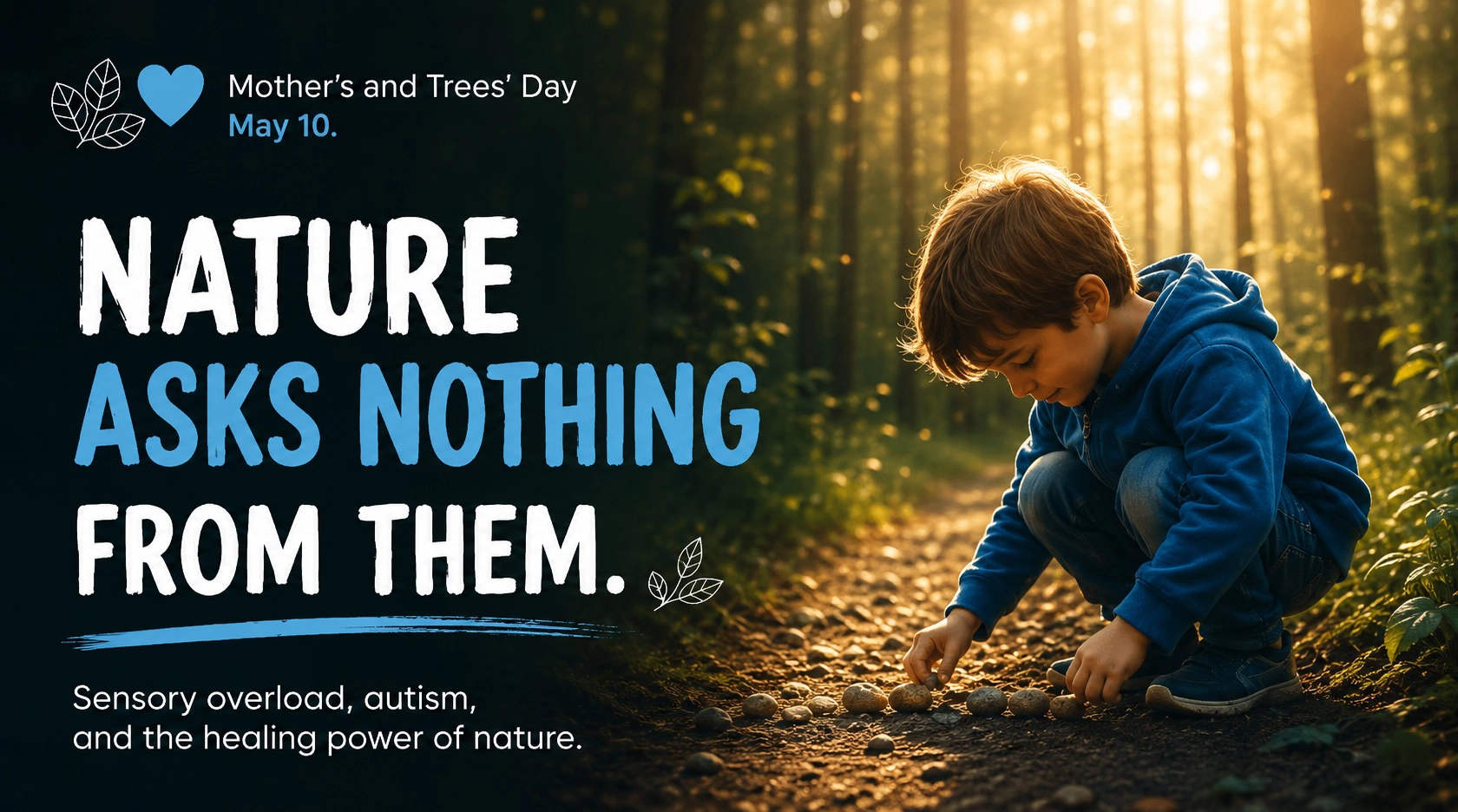
The Forest Asks Nothing of Him
A father's personal story about nature, sensory overload, and why the forest can become a safe place for neurodivergent children.
The Forest Asks Nothing of Him
Sensory overload, autism, and the quiet of nature
Sometimes the world is too much.
Too many sounds. Too many people. Too many sentences at once.
And some children are not "overreacting" to that. They are genuinely feeling it more intensely.
For a long time, this was hard for us to understand. Not because we were not paying attention, but because sensory overload is often invisible from the outside. Inside, it can feel as if the whole world has become too loud, too bright, and too fast.
What We Call Background Noise
That day began like any other.
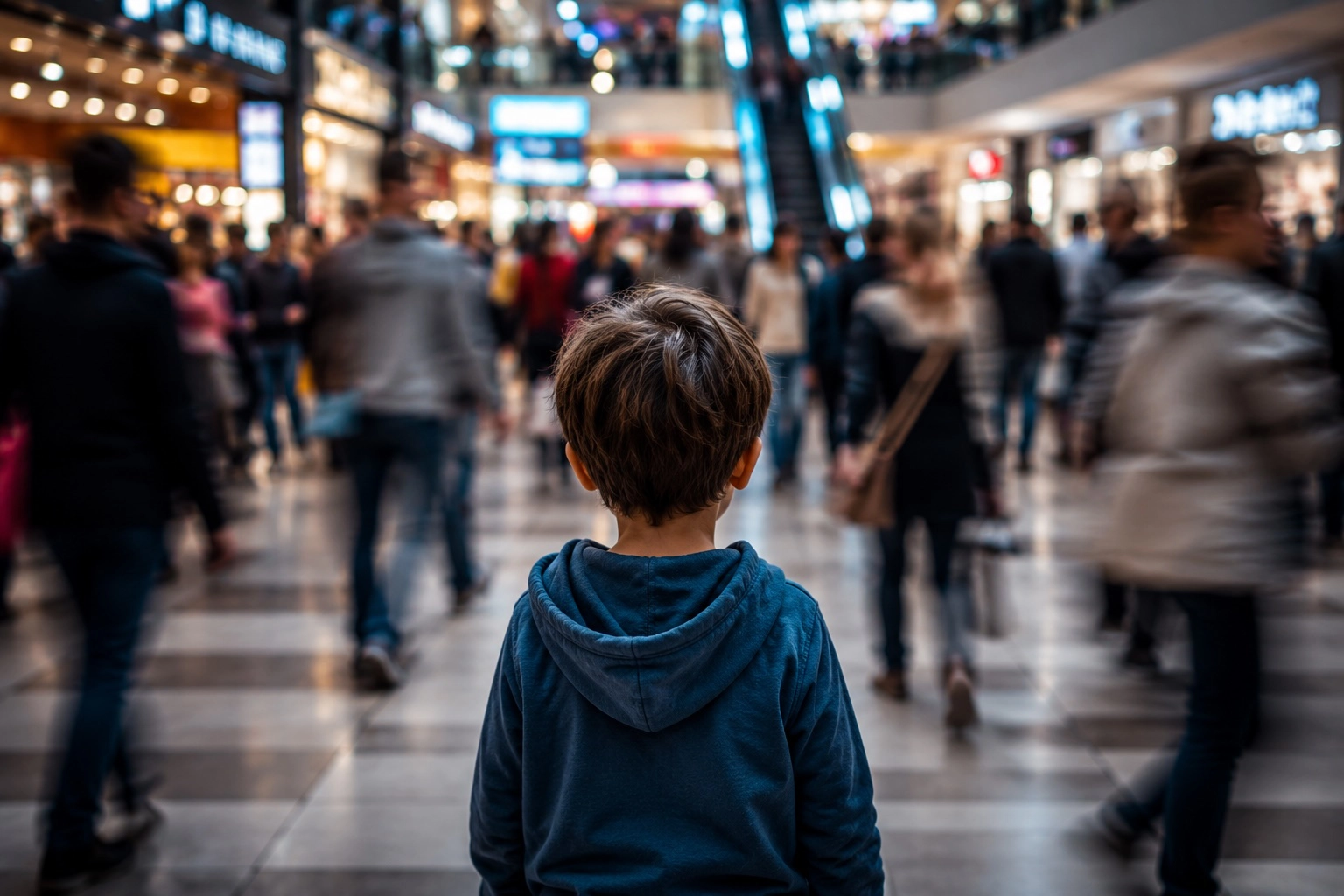
Rushing. Tiredness. Too many people. Several conversations at once. Sudden noises. A whole day's worth of small sensations that adults somehow filter out without thinking.
But I could see the first signs on his face: that quiet exhaustion people often miss.
For a long time, I did not understand it.
How could something I barely noticed be so hard for him? Several voices at once. A sudden sound. Sunlight flickering through the car window. Wind. Laughter from behind.
For us, these are just pieces of the world.
For him, sometimes they are the whole world.
And as a parent, there comes a moment when you realize he is not misbehaving. He is not being dramatic. He is not too sensitive in some spoiled way.
He is constantly working through things the rest of us filter automatically.
At the Edge of the Forest
Then we went to the forest.
It was not a grand hike. Not a perfect family outing. More like an escape at the end of a long day.
I remember him getting out of the car and simply standing there for a moment.
Then he started to run.
Not far. Just freely. As if something had lifted from his shoulders.
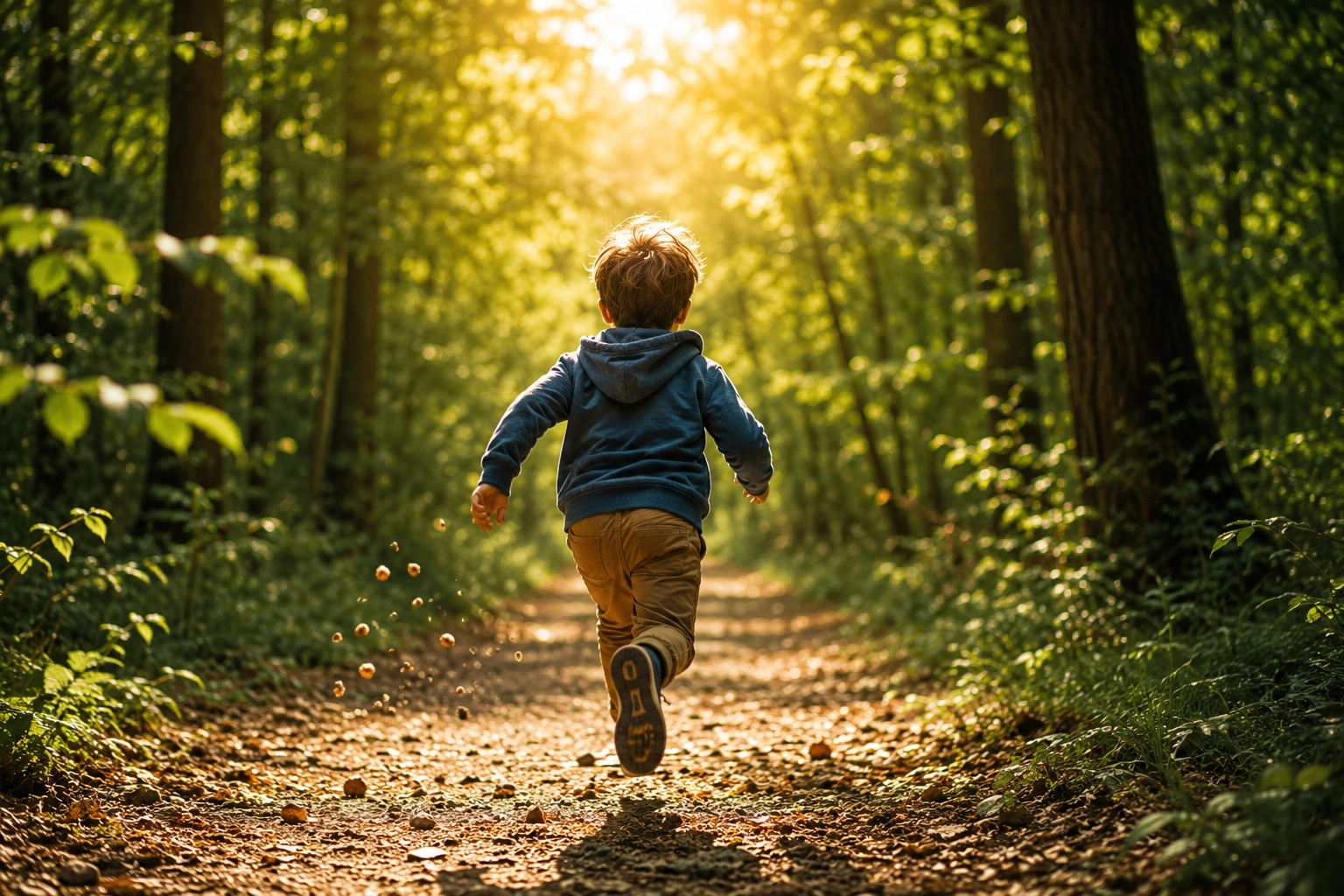
He bent down for a stone, picked it up, looked at it, then began searching for more. He arranged stones on the ground, studied leaves, and smiled.
It was the kind of calm smile we had not seen all day.
And that was when I understood something.
Nature Asks Nothing of Him
In the forest, there is no "too much".
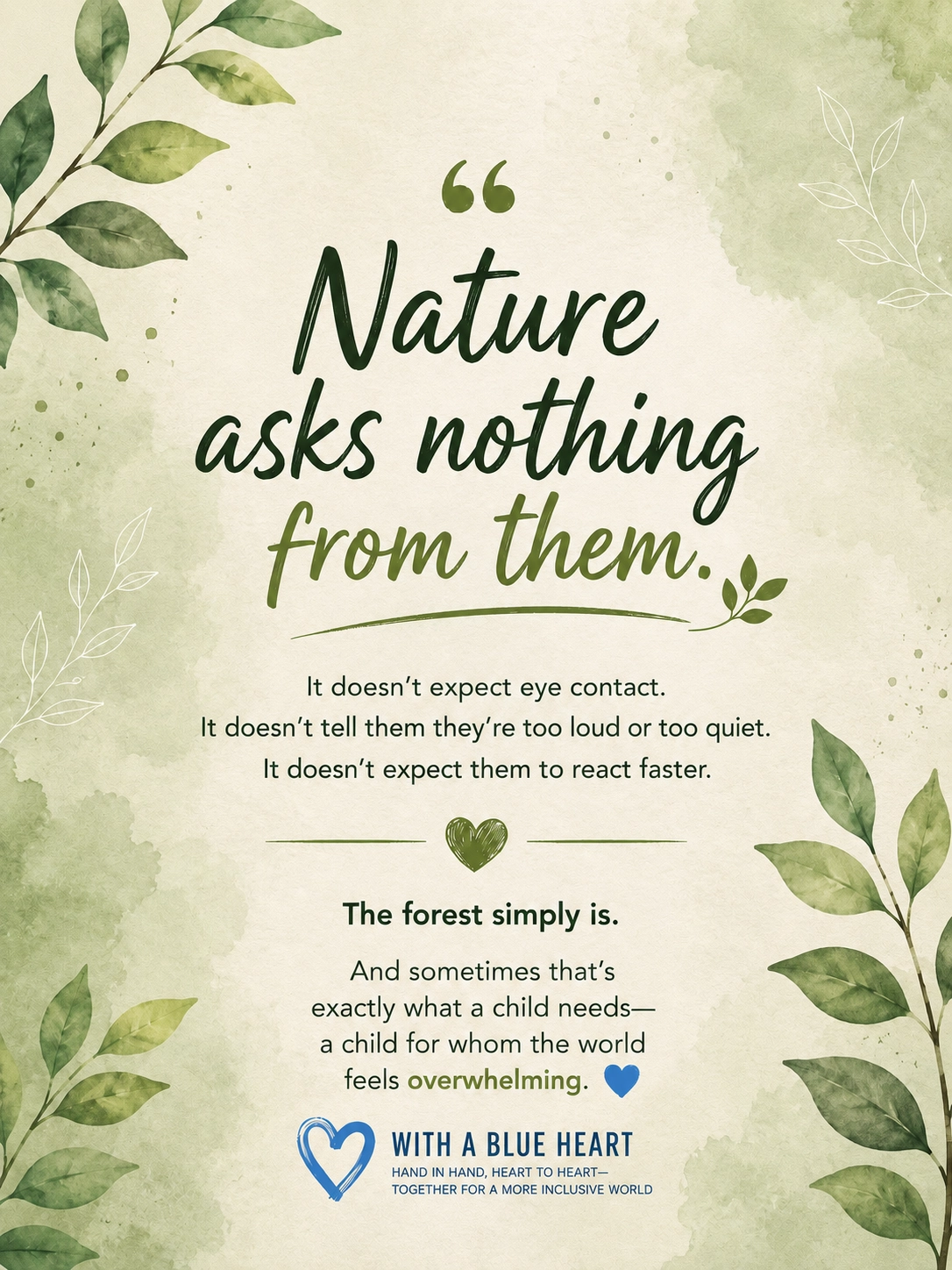
The birds do not expect eye contact. The trees do not tell him he is too loud or too quiet. The wind does not need him to answer faster.
There is no social puzzle to solve. No hidden rulebook.
Nature simply is.
And maybe that is why it works for him.
Because there he does not have to keep adapting to a world that often moves too quickly. He does not have to explain himself. He does not have to "function well".
He can just exist.
“Nature asks nothing of him. There, he can simply exist.”
Share:Share
What Birds and Trees Day Can Remind Us
As children, many of us learned about Birds and Trees Day as something connected to nature protection.
And of course it is.
But as a parent, it means something else to me now too.
Some children do not experience nature as just a nice program or a family trip. For them, it can be a safe place. A space where their nervous system is not fighting every second.
Where silence is not empty, but calming.
Where the movement of leaves is more predictable than the movement of people.
What I See Differently Now
I used to think adaptation meant teaching him to tolerate this world better.
Now I think we need to understand his world better.
“We need to understand his world better.”
Share:Share
Some children are not louder or more sensitive for no reason.
They simply feel the world differently.
Once you truly understand that, you look differently at the child in the shop who covers his ears. You look differently at the child who becomes exhausted during a crowded afternoon. You look differently at the parent quietly trying to hold it all together.
And in the meantime, we learn to search for the places where our child can finally feel okay.
For us, one of those places became the forest.
Is there a place where your child calms down too? A place where the world is finally not too much?
Tell us in a comment, or share your story on our Facebook page.
Oszd meg:Facebook